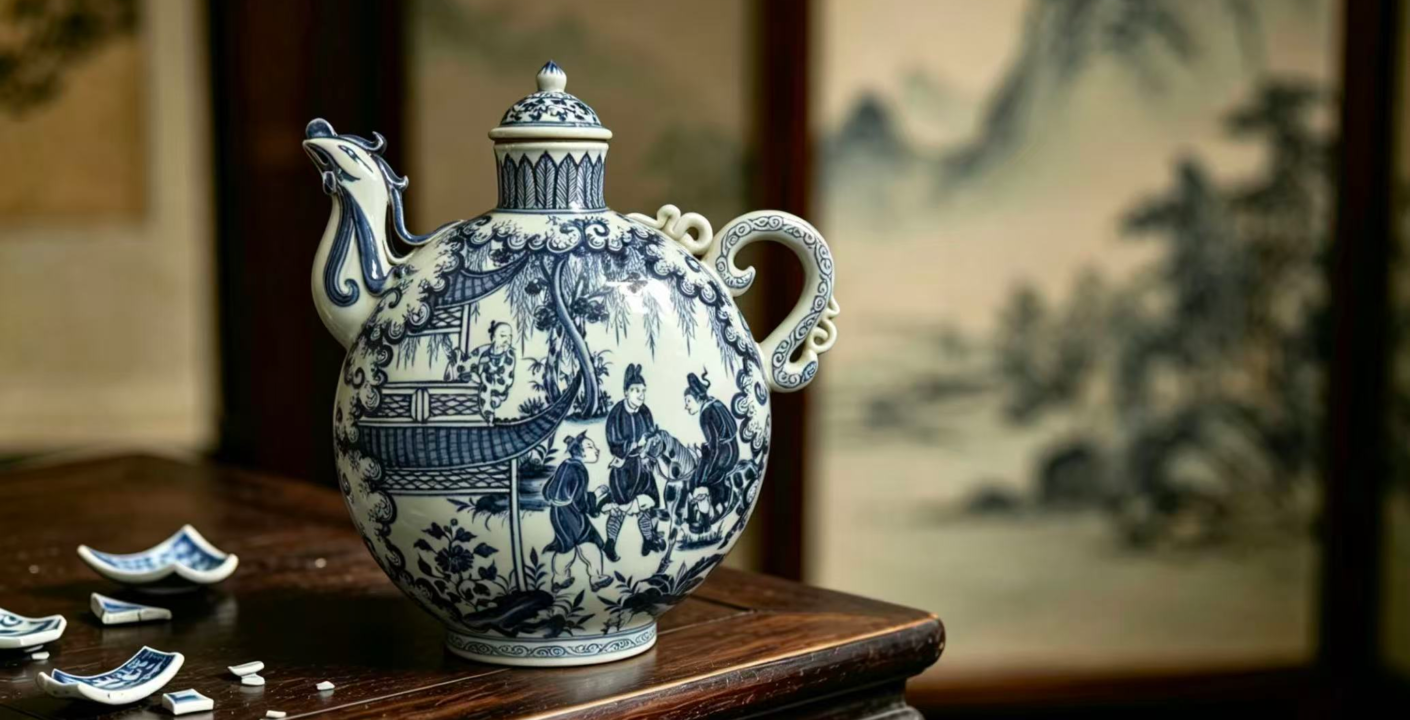
Traditional Chinese porcelain is often recognized for its technical refinement, but its deeper significance lies in the aesthetic philosophy it represents. Across centuries, porcelain evolved not merely as a craft, but as a reflection of cultural ideals — balance, restraint, harmony, and a quiet sense of order.
The surface of porcelain, with its subtle glaze transitions and controlled forms, expresses a kind of beauty that avoids excess. It does not rely on ornamentation or visual intensity, but instead on proportion, rhythm, and silence. This restrained aesthetic is a defining characteristic of Eastern visual culture.
In historical context, porcelain was also closely tied to daily life, ritual, and cultural exchange. It moved between households, regions, and dynasties, carrying with it both functional use and symbolic meaning. Over time, it became a medium through which cultural identity was expressed and preserved.
Today, traditional porcelain continues to resonate in contemporary interiors and private collections. Its presence is not dominant, but atmospheric — shaping space through subtle refinement rather than visual force.