
What Is Paper Sculpture?
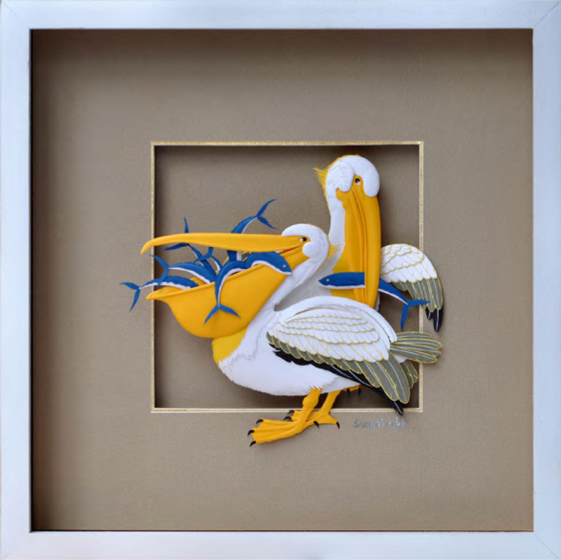
Paper sculpture—also known as paper relief art—is an art form that places paper at the center of creation. Artists use carefully selected papers as their primary material and employ tools and hand techniques such as tearing, cutting, folding, layering, pasting, molding, spraying, washing, and shaping to construct intricate works.
This art form combines the strengths of painting and sculpture: the rich colors and details of painting, and the spatial depth and volume of sculpture. The result is a unique and expressive visual language with extraordinary artistic value.
In 18th-century Europe, artists began exploring paper as a sculptural medium. A notable pioneer, British paper artist Augustine Walker, created maritime-themed paper artworks in the 1760s, many of which are still preserved at the National Maritime Museum in Greenwich.
Pushing Boundaries: Giving Paper New Life Through Light and Form
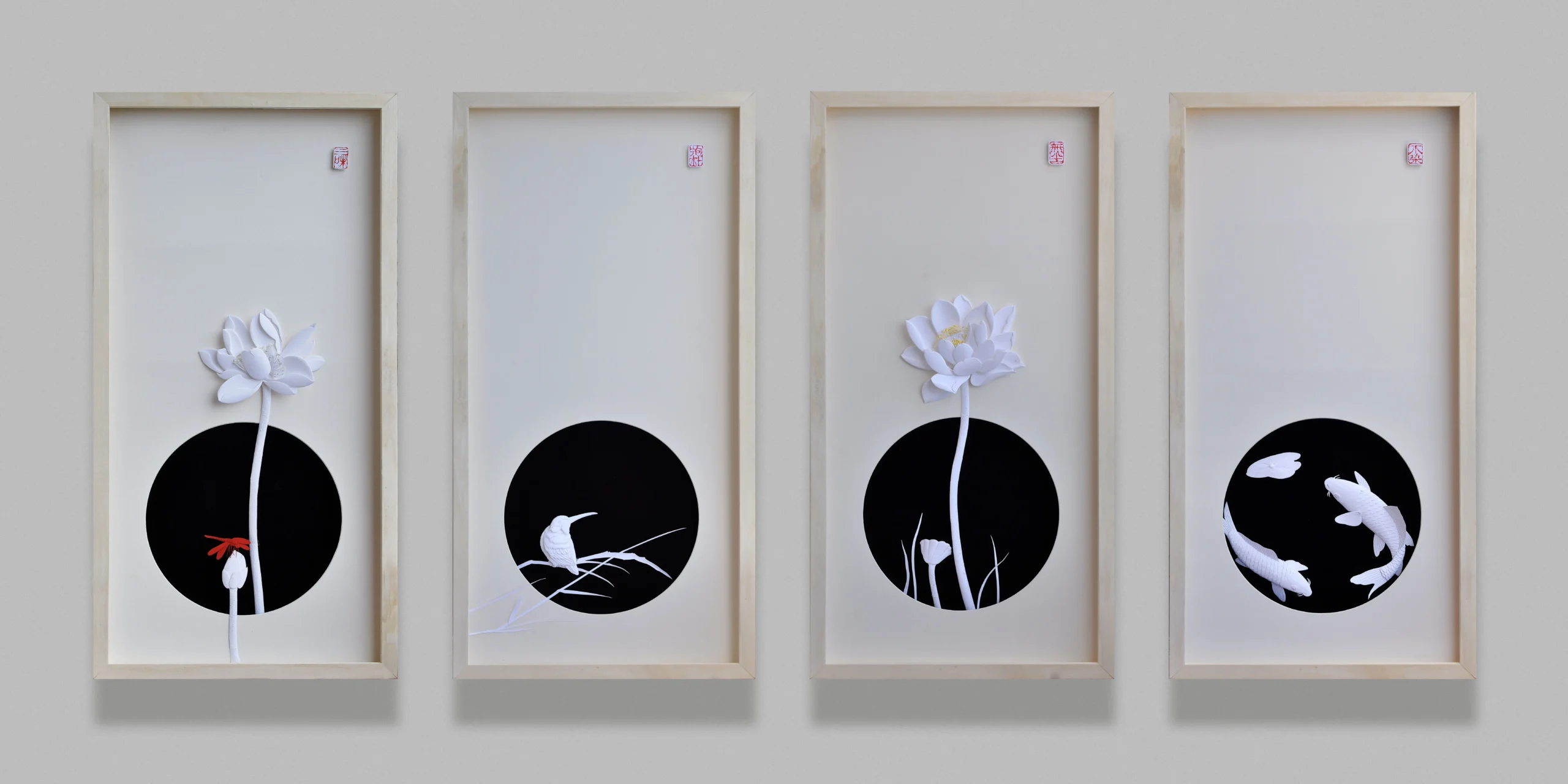
Traditionally, paper art was primarily flat. Paper sculpture breaks this boundary, introducing three-dimensional and even spatial forms. The artworks seem to transcend the frame—entering the real world of the viewer.
After all, innovation is the soul of art. Every creation begins with a question: How can this be different? To answer it, the artist must challenge convention and find beauty in the ordinary. As Rodin once said, “Beauty is everywhere. What we lack is not her, but the eyes to perceive her.”
Paper itself is a material full of contradictions—light, fragile, thin. These limitations restrict freedom but simultaneously create unparalleled aesthetic beauty. Today, technological advances have produced specialized papers that are fire-resistant, washable, or extremely durable. Mastery lies in understanding these properties and fully exploiting their potential. This sensitivity to material is what sets paper art apart from other artistic fields.
In contemporary art, personal expression and conceptual language often replace strict realism. New materials and techniques are widely used, yet mass-produced materials can feel cold and distant. Traditional materials, shaped by hand, retain warmth and humanity. By combining traditional paper art with modern craftsmanship, paper sculpture bridges this emotional gap—achieving harmony between tradition and modernity.
Rather than seeing paper sculpture as a completely new art form, it is more accurately understood as a revival of traditional materials through the lens of contemporary art.